Introduction
Facial puffiness is a common concern after poor sleep, salty meals, stress or long periods of sitting. It often appears around the eyes after waking, although the cheeks and jawline may also look fuller or feel heavier.
A puffy appearance across the face may be linked to temporary fluid retention, which is why gentle lymphatic techniques that support natural drainage may be more relevant than treatments intended to alter facial structure.
Puffiness can sometimes be mistaken for facial fat gain, loose skin or signs of ageing. However, fluid-related fullness can change throughout the day and may vary with factors such as movement, hydration and rest. Structural facial characteristics, on the other hand, are unlikely to change through massage alone.
This guide looks at gua sha and manual facial massage as individual techniques, before exploring how therapist-led assessment can influence pressure, sequence and suitability. For a puffy-looking face, therapist-led lymphatic drainage may provide temporary support when the concern is suitable for cosmetic care.
At 21st Century Beauty Spa, these factors are considered during consultation before a suitable service is selected. The aim is to provide measured, personalised care based on skin condition, comfort, visible puffiness and recent treatment history, rather than promise permanent sculpting.
Key Takeaways:
- Gentle lymphatic techniques may help reduce temporary, fluid-related facial puffiness, but they should not be viewed as a method for permanent facial slimming.
- Gua sha uses focused, tool-based strokes, while manual facial massage uses broader hands-on techniques and may provide a relaxing experience.
- Gentle pressure is generally more appropriate for facial lymphatic techniques, as forceful scraping or deep kneading may irritate the skin.
- Sudden, painful, hot, one-sided or persistent swelling should be medically assessed, particularly if the lips, tongue or throat are affected, or if there is difficulty breathing or swallowing.
- At 21st Century Beauty Spa, the therapist considers factors such as the location of puffiness, skin sensitivity, facial tension, recent procedures and treatment expectations when recommending a suitable facial service.
Understanding Facial Puffiness And The Lymphatic System
What Causes A Puffy Face?
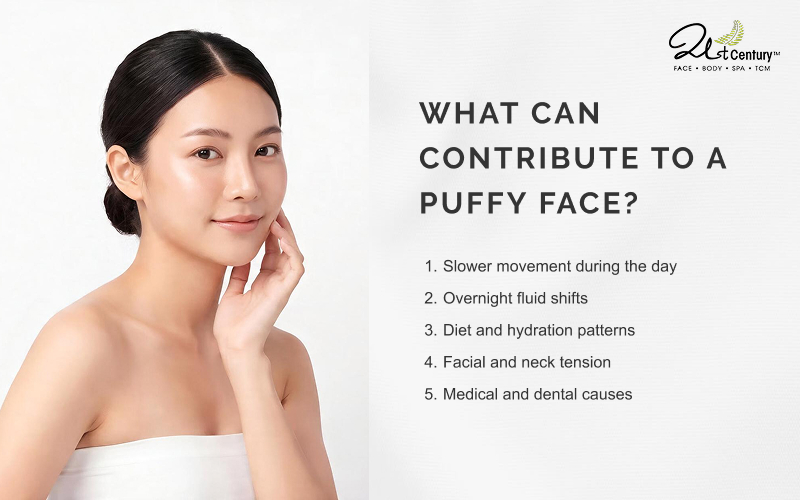
What Causes a Puffy Face?
Facial puffiness can occur when fluid temporarily accumulates within the soft tissues of the face. It may be most noticeable beneath the eyes, but can also make the cheeks or jawline appear fuller.
When a puffy appearance of the face is related to temporary fluid retention, gentle lymphatic techniques may support natural drainage without attempting to alter fat, muscle or bone structure.
Slower Movement During the Day
The lymphatic system does not have a central pump like the heart. Normal movement, breathing and muscle activity contribute to the movement of lymph fluid throughout the body.
A sedentary routine does not necessarily indicate a lymphatic problem. However, spending long periods with limited movement may coincide with muscular tightness and other factors that make facial puffiness more noticeable.
Overnight Fluid Shifts
Lying flat for several hours may contribute to temporary fluid accumulation around the upper cheeks and eye area. This may help explain why morning puffiness can gradually become less noticeable as normal activity resumes.
For someone who wakes with a puffy-looking face, gentle lymphatic facial massage may support temporary fluid drainage, although sleep quality, allergies and other factors should also be considered.
Diet and Hydration Patterns
High-sodium meals, alcohol, inconsistent hydration and disrupted sleep may contribute to a heavier or puffier-looking face. Maintaining balanced hydration throughout the day is generally more appropriate than trying to correct puffiness immediately before a treatment.
Facial and Neck Tension
Tension around the jaw, neck and shoulders may contribute to a feeling of facial heaviness or tightness.
If the face feels tense as well as puffy, a therapist may incorporate gentle lymphatic drainage techniques alongside relaxation-focused facial massage, depending on the client’s comfort and suitability.
Medical And Dental Causes
Allergies, infections, medication reactions, dental problems, sinus conditions, injuries and some medical conditions can cause facial swelling.
Medical advice should be sought if swelling appears suddenly, persists, becomes painful or hot, occurs on one side, or is accompanied by redness, fever, dental pain or other unusual symptoms.
Swelling involving the lips, tongue, or throat requires urgent medical attention, particularly when breathing or swallowing is affected. These symptoms can occur with angioedema, which may require emergency treatment.
A beauty therapist will not attempt to diagnose or treat these symptoms.
The Role Of The Lymphatic System In Facial Contours
The lymphatic vessels in the face form part of the body’s wider lymphatic network. This system helps regulate fluid by collecting excess fluid from tissues and returning it to circulation.
When fluid temporarily accumulates in facial tissues, the under-eye area may appear fuller, the cheeks may look heavier and the jawline may appear less defined.
For a puffy face, gentle lymphatic techniques typically use light, controlled movements to support natural drainage. Many lymphatic vessels are located close to the skin so applying excessive pressure may cause redness, soreness or skin irritation.
The term “lymphatic drainage facial” is sometimes used broadly online. However, cosmetic facial massage should be distinguished from clinical manual lymphatic drainage, which may be used as part of professionally managed care for conditions such as lymphoedema or treatment-related swelling.
A spa facial for a temporarily puffy face may incorporate gentle lymphatic drainage, but this remains different from clinical lymphatic treatment for diagnosed conditions.
At 21st Century Beauty Spa, the therapist considers whether lymphatic drainage is appropriate for a puffy face based on visible puffiness, skin condition and comfort. The treatment focuses on gentle, controlled movements rather than forceful pressure.
Where appropriate, the facial massage may include movements across the neck and different areas of the face, rather than focusing solely on the under-eye area. The exact technique and sequence should be adjusted according to the individual client’s needs and comfort.
Comparing Lymphatic Techniques For Puffy Faces
Professional facial care is not necessarily a separate technique from gua sha or manual massage. Its value lies in how a therapist assesses the concern, selects an appropriate technique, adjusts pressure and considers the treatment sequence based on the individual client.
Gua sha: Targeted Tool-Based Lymphatic Stimulation
Gua sha uses a smooth-edged tool that glides across lubricated skin. While traditional body gua sha may involve firmer pressure, facial gua sha is generally performed with a lighter touch.
For a puffy face, gua sha may support lymphatic drainage through broad, slow strokes that follow the contours of specific areas.
The shape of the tool allows the therapist to work across specific areas in a controlled manner. This may appeal to clients who prefer a tool-based facial massage technique or want to focus on particular areas of visible puffiness.
Someone searching for a gua sha facial treatment in Singapore may encounter services with different techniques, pressure levels, and intended outcomes. The presence of a gua sha tool alone does not confirm that a treatment is correctly performed.
Targeted Work Around The Jaw And Cheeks
The shape of the gua sha tool allows the therapist to work along the jawline and across broader areas of the cheeks using controlled movements.
When the lower face appears puffy, controlled gua sha strokes may support lymphatic drainage while easing tension around the jaw.
Any visible change in facial contours is generally temporary. It may be associated with changes in fluid-related puffiness or the relaxing effect of massage, rather than fat loss or changes to the underlying facial structure.
Pressure and Direction Matter
Excessive pressure or scraping may cause skin irritation, bruising or tenderness, particularly on the delicate skin of the face. Facial gua sha should therefore be performed with appropriate lubrication, gentle pressure and controlled, slow movements.
For safe drainage, the lymphatic technique used on a puffy face should feel controlled and gentle rather than forceful.
When Gua sha May Not Be Suitable
Facial gua sha should not be performed over broken, infected, bruised, or actively inflamed skin, such as painful acne, flare-ups, or irritated areas. Additional caution may be needed following fillers, injections, facial surgery, thread procedures, laser treatments or other aesthetic procedures.
If you have recently undergone an aesthetic or medical procedure, follow the advice of the practitioner who performed the procedure on when facial massage can safely resume.
21st Century Beauty Spa offers a gentle, tool-assisted TCM Gua Sha Facial Therapy. During the initial consultation, our therapist assesses the skin’s suitability for the tool and customises the focus of the session, whether that is addressing puffiness, relieving tension, or simply relaxing.
| Comparison area | Gua sha | Manual facial massage | Therapist-led approach |
| Main approach | Uses a smooth tool for controlled strokes | Uses the therapist’s hands across the face | Assesses the concern and selects an appropriate technique |
| Treatment focus | More targeted work around areas such as the cheeks and jawline | Broader hands-on facial massage for relaxation and comfort | Assessment, pressure control, sequencing, and suitability |
| Pressure | Light and adjusted according to technique and skin response | Adjustable throughout the treatment | Adjusted according to skin condition and comfort |
| May suit | Localised puffiness or areas of facial tension | General facial relaxation or clients who prefer hands-on techniques | Clients who benefit from a personalised approach |
Manual Facial Massage: Gentle, Full-face relaxation
Manual facial massage uses the therapist’s hands to work across the face, with finger placement, rhythm and pressure adjusted according to your facial features, skin condition and comfort level.
For a puffy face, manual massage may use gentle lymphatic drainage movements across a wider area while providing a relaxing, full-face experience.
The therapist can adjust the treatment according to your needs, such as using lighter contact around delicate areas, spending more time on areas of facial tension or avoiding areas that feel particularly sensitive.
A Broader Full-Face Approach
Manual massage may feel less targeted than gua sha, but it allows the therapist to work across a broader area, including the forehead, cheeks, jaw and neck.
This hands-on lymphatic drainage approach may suit clients whose face appears puffy across several areas and who prefer manual massage rather than a tool-based treatment.
A manual de-puffing facial should still use suitable direction and pressure. Vigorous kneading is not the same as a considered lymphatic technique.
Relaxation and Muscular Comfort
Manual massage may help ease feelings of tension around areas such as the jaw, temples, forehead and neck, while also providing a relaxing experience.
For a tired or puffy-looking face, gentle massage may be used alongside suitable lymphatic drainage techniques, depending on the client’s needs and comfort. The focus should be on relaxation and temporary de-puffing, rather than treating an underlying medical lymphatic condition.
Suitability for Sensitive Skin
Manual massage can often be adapted for delicate or sensitive skin because the therapist can adjust the pressure and movements throughout the treatment.
However, facial massage may not be suitable during an active skin flare-up, infection, painful acne outbreak or immediately following certain aesthetic or medical procedures. If you have recently undergone a procedure, follow the advice of the practitioner who performed it before booking a facial massage.
How Therapist Assessment Changes the Treatment
A therapist-led approach considers where the puffiness appears, the condition of the skin and the client’s comfort before deciding which facial technique is appropriate. Depending on the individual, this may involve manual massage, gua sha or a combination of suitable techniques.
What the Therapist Assesses
At 21st Century Beauty Spa, our therapist considers where the puffiness appears, such as beneath the eyes, across the cheeks or around the jawline. The skin may also be assessed for sensitivity, inflammation, bruising or signs of recent treatment.
Areas of facial, jaw, neck or shoulder tension may also be considered when determining which technique and pressure are most comfortable. If you have recently undergone fillers, injections, surgery, laser treatments or other aesthetic procedures, the treatment may need to be modified or postponed based on the appropriate professional guidance.
This assessment matters because lymphatic drainage for a puffy face should support comfort and suitability rather than follow the same routine for everyone. The treatment is adapted to the individual rather than following the same routine for every client, with emphasis on comfort, skin suitability and realistic expectations.
How Treatment Sequencing Changes The Experience
The sequence of a facial treatment can be adjusted according to the client’s skin condition, comfort and treatment goals. At 21st Century Beauty Spa, a session may begin around the neck before progressing across the lower and upper face, depending on the selected treatment.
The session may also include cleansing, hydration, calming products or another suitable facial treatment.
If you are considering face rejuvenation treatments, it is helpful to understand the actual treatment steps, products, pressure and intended outcomes rather than relying on the service name alone.
For a puffy face, lymphatic drainage may be incorporated into a gentle, structured treatment sequence rather than focusing immediately on the under-eye area. The exact sequence should depend on the individual treatment and the client’s needs.
Gua sha, Manual Massage, and Bojin
21st Century Beauty Spa also provides TCM Facial Bojin Therapy. Facial Bojin uses a Bojin is different from both gua sha and clinical manual lymphatic drainage. It may be considered by clients interested in a structured, tool-based facial treatment that also focuses on areas of facial tension.
Traditional TCM concepts should be kept distinct from established lymphatic anatomy. Bojin should therefore not be presented as a treatment for a diagnosed lymphatic condition.
Depending on the individual’s concerns and skin condition, a suitable facial may involve manual massage, gua sha, Bojin or another approach. In some cases, a particular technique may be more appropriate than combining several methods.
Why Combining Techniques is not Always Necessary
Using multiple techniques does not automatically make a facial treatment more effective. The most appropriate approach depends on the client’s skin condition, comfort level, treatment goals and suitability.
For facial puffiness, a gentle and well-sequenced technique may be more appropriate than combining multiple tools or intensive massage techniques. A personalised approach allows the therapist to focus on what is suitable for the individual rather than adding techniques simply for the sake of doing more.
Frequently Asked Questions
Which lymphatic technique is best for reducing facial puffiness?
There is no single technique that is best for everyone. The appropriate lymphatic drainage approach for a puffy face depends on where the puffiness appears, your skin sensitivity, facial tension, comfort level and treatment goals.
For a puffy-looking face, gua sha provides a tool-based approach with controlled strokes, while manual facial massage offers broader hands-on contact and may provide a more relaxing experience.
If swelling is persistent, unexplained, painful or unusual, it should be medically assessed before considering a beauty treatment.
Can Gua Sha Replace Clinical Lymphatic Drainage Treatments?
No. Cosmetic gua sha and facial massage should not be considered substitutes for clinical manual lymphatic drainage used for diagnosed lymphoedema, post-surgical swelling or other medical conditions.
A gua sha facial may be used as part of cosmetic facial care for temporary puffiness, but clinical lymphatic care should be provided by an appropriately qualified healthcare professional as part of the recommended care plan.
If you have an existing medical condition or have recently undergone surgery or an aesthetic procedure, seek guidance from your healthcare or treatment provider before booking a facial treatment
How Often Should Lymphatic-Focused Facial Treatments Be Done?
The frequency of lymphatic drainage treatments for a puffy face can depend on factors such as skin sensitivity, lifestyle, recent procedures and how the skin responds to treatment.
Rather than assuming that more frequent treatments will create better or permanent results, the appropriate frequency should be considered on an individual basis, taking into account your skin condition and treatment goals.
Can Facial Massage Permanently Slim the Face?
No. Facial massage does not remove facial fat or permanently alter the underlying structure of the face.
A puffy-looking face may appear temporarily less full following gentle massage when fluid-related puffiness is present. Massage may also help create a more relaxed feeling around areas of facial tension, but it cannot reshape bone, remove fat or create permanent structural changes.
How Can Home Gua Sha Be Performed More Safely?
If you choose to practise gua sha at home, use a clean tool and suitable facial product to allow the tool to glide without excessive dragging. When using gua sha on a puffy face, keep the pressure gentle when following lymphatic drainage movements rather than applying more force.
Stop if the skin becomes painful, bruised or unusually irritated. Avoid using gua sha over open wounds, active infections, significant inflammation or recently treated areas.
For facial puffiness, the focus should be on gentle, comfortable movements rather than applying more pressure in an attempt to achieve a stronger result.
When should facial puffiness be checked by a doctor?
Seek medical advice if swelling appears suddenly, persists longer than expected, becomes painful or warm to the touch, occurs on one side of the face, or is accompanied by redness, fever, dental pain, or other unusual symptoms.
Swelling involving the lips, tongue, or throat requires urgent medical attention, particularly if it affects breathing or swallowing.
Conclusion
When a puffy face is linked to temporary fluid retention, gentle lymphatic drainage may help create a fresher, less puffy-looking appearance when the concern is suitable for cosmetic care.
Gua sha uses focused strokes around areas such as the cheeks and jawline, while manual facial massage provides broader contact, adjustable pressure, and a relaxing experience. Therapist-led treatments can further support the process through individual assessment, tailored techniques, and realistic expectation-setting.
However, these techniques do not remove facial fat, change bone structure, or treat unexplained medical swelling. Understanding the cause and pattern of facial puffiness is therefore important before choosing a treatment approach.
At 21st Century Beauty Spa, our therapists assess where puffiness appears, whether the skin is reactive or has recently undergone treatment, the level of facial tension present, and your desired outcome before recommending an appropriate approach.
Book an appointment today or call our branches at Ang Mo Kio: +65 9234 5343 and Beauty World Plaza: +65 9011 9097.